Urban homes today are defined by a quiet kind of ambition. Smaller footprints, open layouts, and the pressure to make every surface count — these realities are reshaping how architects and designers approach material selection. And in this context, one material has steadily stood out: grey quartz.
It’s not a passing trend driven by seasonal palettes or a single mood board. Grey quartz has earned its place through a combination of thoughtful design and reliable material performance. For professionals specifying high-quality interior stone surfaces, it consistently delivers on both fronts — something leading suppliers like Techstone Quartz are increasingly known for in modern projects, especially among artificial quartz stone manufacturers and premium quartz slabs India suppliers serving modern global projects.
Why Grey Quartz Countertops Are Dominating Modern Interior Design
Grey occupies a unique position in the design spectrum — it reads as neutral without feeling empty. Unlike white, it conceals imperfections. Unlike black, it doesn’t overpower. It simply balances the space.
In urban homes, where the palette often needs to unify multiple zones, grey creates visual harmony without monotony. It pairs effortlessly with warm wood tones, cool concrete finishes, brushed metals, and even bold accent colours. Across minimalist, industrial, and contemporary luxury styles, grey remains consistently relevant.
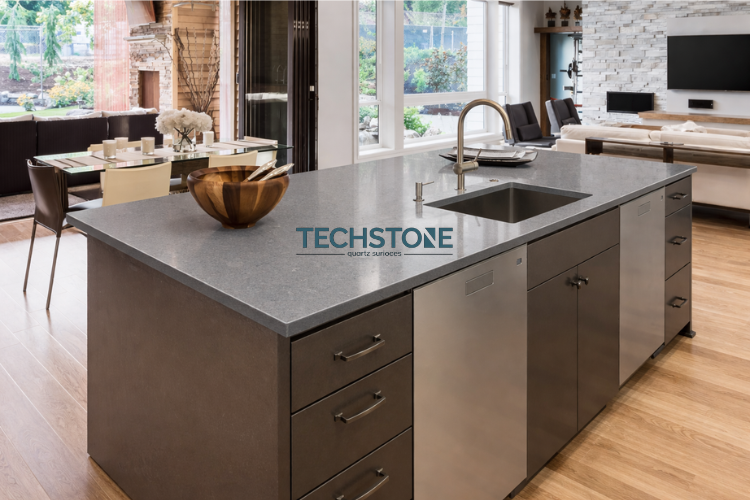
There’s also a longevity factor. Bold colours may trend and fade, but grey remains timeless. It’s a material choice that continues to feel right even years after installation, particularly in applications like Grey Quartz Countertops used in modern kitchens.
What Makes Quartz Ideal for Urban Interior Stone Surfaces?
Quartz stone is engineered — and that’s exactly where its strength lies. Unlike natural stone, which varies due to geological formation, engineered quartz is manufactured under controlled conditions using quartz aggregates, resins, and pigments.
The result is a surface that performs consistently across all parameters — durability, porosity, and colour uniformity.
For urban applications, the advantages are clear:
- Non-porous surface: No absorption, no sealing required
- High durability: Handles daily wear, heat, and spills effectively
- Consistency at scale: Ideal for multi-unit residential and commercial projects using premium quartz slabs India manufacturers produce for global markets.
Top Benefits of Grey Quartz Countertops for Urban Homes
1. Design Versatility
Grey quartz complements rather than competes. Whether paired with white cabinetry or darker wood finishes, it adapts effortlessly — reducing design risk across projects.
2. Clean and Modern Aesthetic
In compact spaces, visual simplicity matters. Grey quartz creates uninterrupted surfaces, making it ideal for kitchen platforms, islands, and Grey Quartz Countertops in urban homes.
3. Low Maintenance Advantage
Urban lifestyles demand convenience. Grey quartz requires minimal upkeep — simple cleaning is enough to maintain its finish over time.
4. Seamless Look with Large Slabs
Modern quartz is now available in large and super jumbo slab formats. This allows entire countertops or walls to be covered without visible joints, enhancing visual continuity.
5. Multi-Application Use
From kitchens to bathrooms and feature walls, grey quartz works across applications — maintaining consistency throughout the space.
Grey Quartz Countertops vs Marble, Granite & Other Materials
Vs Marble:
Marble offers natural beauty but requires maintenance. Quartz provides better durability and consistency for high-use areas.
Vs Granite:
Granite is strong but requires sealing and varies in pattern. Quartz ensures uniformity and ease of use.
Vs Terrazzo:
Terrazzo adds texture and character, but quartz performs better for countertops and hygiene-sensitive areas.
These materials are not competitors but complements. A well-designed project often combines them strategically.
The Role of Premium Quartz Slabs in Modern Interior Design
The move toward large-format slabs reflects a broader design preference for continuity. Fewer joints mean better aesthetics and lower maintenance.
Premium quartz slab exporters like Techstone Quartz, offering consistent large slab availability and multiple finish options, play a crucial role in helping designers achieve high-end interior results.
When Grey Quartz Countertops May Not Be the Best Choice
Grey quartz may feel slightly cool in spaces designed for warmth — such as traditional kitchens or heritage-style interiors. In such cases, warmer tones or natural materials may work better.
Also, overusing grey across all surfaces in large spaces can lead to visual fatigue. Balance is key.
Choosing the Right Artificial Quartz Stone Manufacturers in India
For professionals, selecting the right supplier is as important as selecting the material.
Consider:
- Slab consistency across batches
- Availability of large formats
- Range of finishes
- Reliable supply timelines
Common Mistakes When Selecting Quartz Countertops
- Choosing colour only under showroom lighting
- Ignoring slab size during planning
- Overlooking the impact of finish (matte vs polished)
FAQs About Grey Quartz Countertops for Urban Homes
Is grey quartz good for kitchen countertops?
Yes, it is highly durable, non-porous, and easy to maintain.
Does grey quartz go out of style?
No, it remains a timeless and versatile choice.
Quartz or marble — which is better?
Quartz is better for high-use areas; marble suits decorative applications.
Can grey quartz be used in bathrooms?
Yes, its non-porous nature makes it ideal for wet areas.
Conclusion: Why Grey Quartz Countertops Are a Smart Investment
Grey quartz has secured its place in urban interiors by combining design flexibility with dependable performance. It adapts to evolving styles while maintaining its core strengths.
For architects, designers, and builders, it remains a practical and aesthetic choice. And for clients seeking long-term value with minimal maintenance, grey quartz continues to be one of the most reliable materials available today — especially when sourced from trusted artificial quartz stone manufacturers in India.