When planning a new kitchen or renovating an existing one, selecting the right countertop material is one of the most important decisions you’ll make. The debate between granite vs quartz kitchen slabs continues because both materials offer unique advantages. However, factors such as durability, maintenance, appearance, and long-term value can make one option a better fit for your needs.
In this guide, we’ll compare granite and quartz slabs to help homeowners, architects, interior designers, builders, and dealers make an informed choice.
Granite vs Quartz Kitchen Slabs: Understanding the Basics
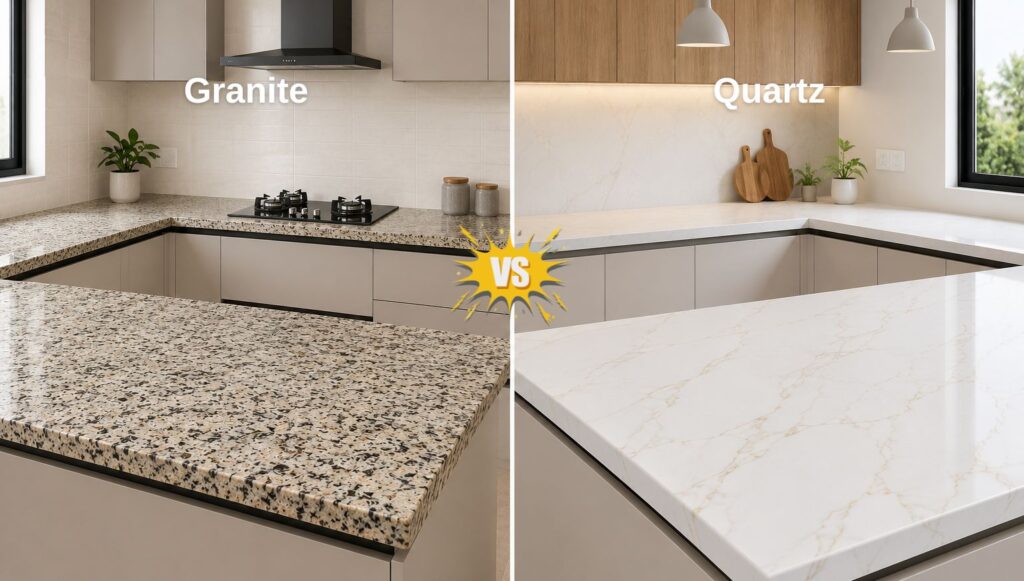
Granite is a natural stone extracted from quarries and cut into slabs for residential and commercial use. Every slab has unique patterns and colors formed by nature.
Quartz, on the other hand, is an engineered quartz surface made by combining natural quartz crystals with resins and pigments. This manufacturing process creates a highly durable and consistent material that is widely used for kitchen countertops, islands, backsplashes, and even bathroom vanity tops.
Durability: Which Surface Lasts Longer?
When comparing granite vs quartz kitchen slabs, durability is often the deciding factor.
Granite
- Naturally hard and heat resistant.
- Can chip or crack under heavy impact.
- Porous surface may absorb liquids if not sealed regularly.
Quartz
- Non-porous and highly resistant to stains.
- Excellent scratch resistance for daily use.
- Engineered for long-lasting performance in busy kitchens.
For households that cook frequently, quartz stone provides a reliable and low-maintenance solution without compromising on style.
Appearance and Design Flexibility
One of the biggest advantages of quartz is its design versatility.
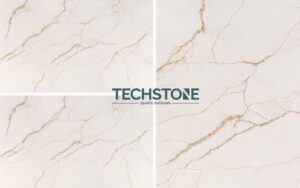
Natural granite offers one-of-a-kind patterns, but color choices are limited to what nature provides. In contrast, engineered quartz is available in a wide variety of colors, textures, and marble-inspired designs that complement modern interior design as well as classic spaces.
Popular quartz finishes include:
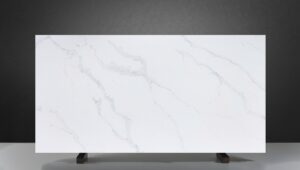
- Pure white surfaces
- Soft grey veining
- Calacatta-inspired patterns
- Sparkle finishes
- Matte and polished textures
This flexibility allows designers to create customized spaces with ease.
Maintenance: Quartz Requires Less Effort
Maintenance is another area where quartz often stands out.
Granite Maintenance
- Requires periodic sealing.
- Needs immediate cleanup of spills to prevent staining.
- Can absorb oils and acidic liquids over time.
Quartz Maintenance
- No sealing required.
- Cleans easily with mild soap and water.
- Naturally resists stains and moisture.
For homeowners seeking low-maintenance countertops, quartz is a practical choice that saves both time and effort.
Cost and Long-Term Value
While initial pricing varies depending on quality and design, long-term ownership costs should also be considered.
Granite may require resealing and occasional repairs, adding to maintenance expenses. Quartz generally requires fewer ongoing treatments, making it a cost-effective investment over the years.
When evaluating granite vs quartz kitchen slabs, it’s important to consider not only purchase price but also durability, maintenance, and lifespan.
Ideal Applications Beyond the Kitchen
Although both materials work well in kitchens, quartz offers exceptional versatility throughout the home.
It is commonly used for:
- Kitchen islands
- Kitchen countertops
- Bathroom vanity tops
- Laundry room counters
- Reception desks
- Wall cladding
- Commercial interiors
Its consistent appearance and hygienic, non-porous surface make it suitable for residential and commercial projects alike.
Buying Tips for Choosing the Right Quartz Slabs
Before making your purchase, keep these points in mind:
- Select slabs from a reputable manufacturer with strict quality standards.
- Examine samples under your kitchen’s lighting conditions.
- Match countertop patterns with cabinets, flooring, and backsplashes.
- Check slab thickness and edge profile options.
- Choose colors that will remain timeless for years to come.
Investing in premium quartz slabs can significantly enhance both the beauty and value of your property.
How to Maintain Quartz Kitchen Countertops
Proper care helps preserve the appearance of your countertops for years.
- Wipe surfaces daily using a soft cloth and mild detergent.
- Clean spills promptly, even though quartz is stain resistant.
- Use trivets for very hot cookware.
- Avoid harsh chemical cleaners or abrasive pads.
- Use cutting boards to protect the finish during food preparation.
With minimal maintenance, durable surfaces like quartz continue looking polished and elegant over time.
Frequently Asked Questions
Is quartz better than granite for kitchen countertops?
Quartz is often preferred because it is non-porous, easy to maintain, and highly resistant to stains and scratches, making it ideal for everyday kitchen use.
Do quartz slabs require sealing?
No. Unlike granite, engineered quartz does not require periodic sealing.
Can quartz be used for bathroom vanity tops?
Yes. Quartz performs exceptionally well as bathroom vanity tops because it resists moisture and is easy to clean.
Which material offers more design choices?
Quartz provides a broader range of colors, patterns, and finishes, making it a popular choice for modern interior design projects.
Conclusion
When comparing granite vs quartz kitchen slabs, both materials have their strengths, but quartz consistently stands out for its durability, low maintenance, and design flexibility. Its non-porous structure, elegant appearance, and wide range of applications make it an excellent investment for homeowners, architects, builders, and interior designers alike.
Whether you’re designing a contemporary kitchen or upgrading a traditional space, high-quality quartz stone and engineered quartz surfaces deliver lasting performance and timeless style. If you’re looking for beautiful, hygienic, and low-maintenance countertops, quartz is a countertop solution that combines practicality with premium aesthetics.